A groundbreaking study laying down the devastating consequences of climate change and rising seas was published by the °®Āžµŗ in September 1989.
Produced amid a backdrop of disastrous floods in Bangladesh and growing sea inundation in Maldives, the report provided world leaders with a glimpse of the dangers they would face in coming decades.
Download the report
Document
(2.19 MB)
Climate Change: Meeting the Challengeā€™ study, led by eminent British scientist Martin Holdgate, looked at the projected impact of rising sea levels on vulnerable countries and concluded that the worldā€™s poor would be the ā€œmain victimsā€ of climate change.
Climate Change: Meeting the Challengeā€™ report called for:
- Improved research and monitoring
- National and international adaption strategies
- Safeguards for biological diversity and natural forests
- Reductions in CO2 emissions and energy usage
- Improved coastal defences to manage sea level rise
ā€œAt a best estimate, we now face changes of 1.0 to 2.0 degrees Celsius in a time period of 40 years and this lies outside the envelope of past experience at a global level,ā€ the report warned. ā€œChanges in climate will change the frequency of extreme climatic events such as severe tropical storms, floods, droughts or extremes of heat.ā€
It continued: ā€œAll countries will be faced with the need to adapt to rapid change, with attendant costs ā€“ in many cases the resulting disruptions and tensions are likely to be considerable.ā€
ā€˜First major intergovernmental reportā€™
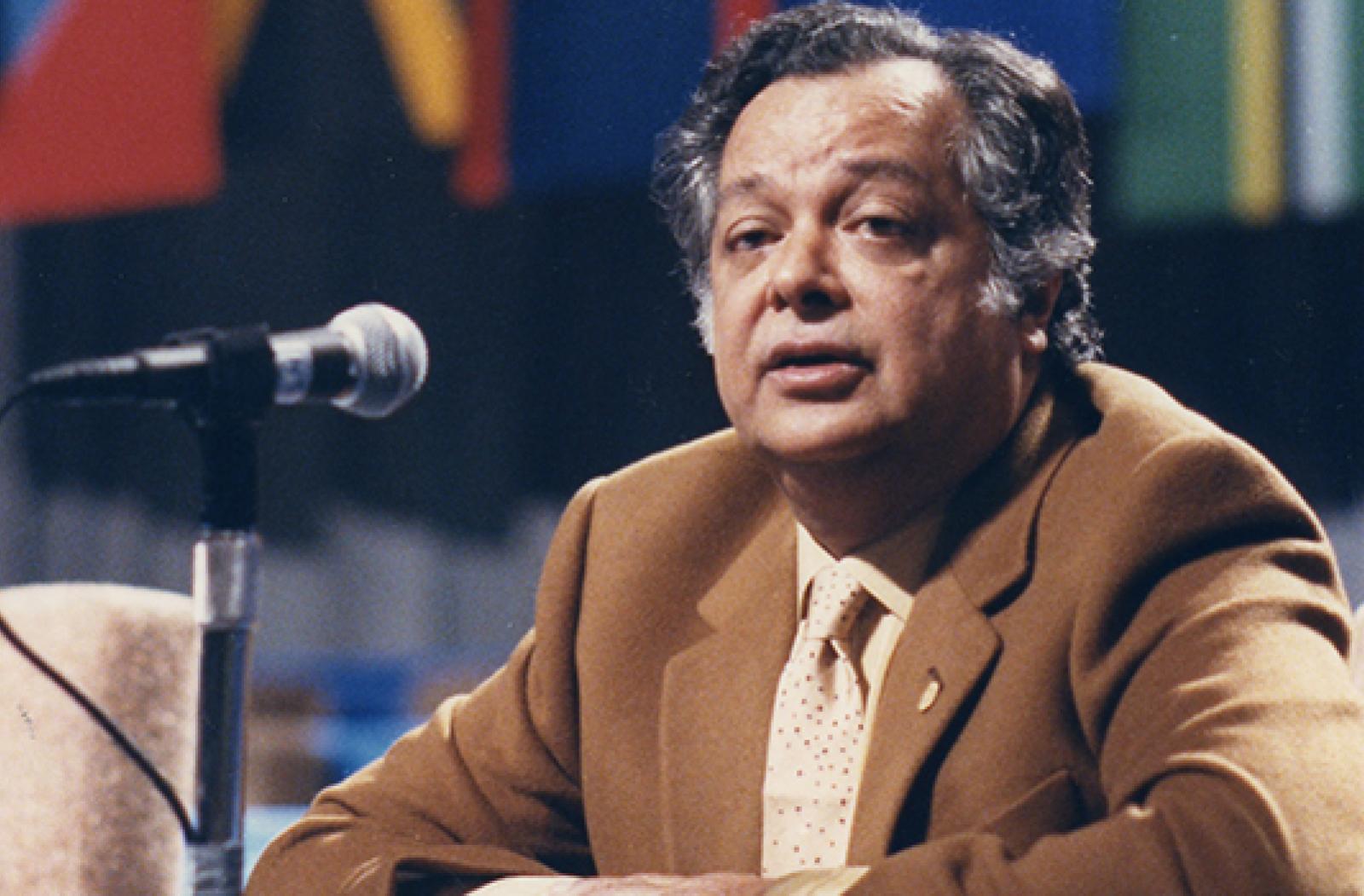
Shridath Ramphal, then Secretary-General of the Commonwealth, who commissioned the report from an international expert group at the Commonwealth Heads of Government summit in Vancouver, Canada, in 1987, described the threat of climate change in his foreword as ā€œtruly global in its implicationsā€.
He said: ā€œIf the Earth is to warm by even the most modest of the various projections, there could be far reaching, long term implications for natural ecological systems, farming, the design of major energy and water projects and for low lying areas that could be affected by rising sea level.ā€
The Holdgate report called for a ā€œmajor international initiativeā€ to establish ā€œglobal responsibilitiesā€ for preventing unmanageable rises in the worldā€™s temperature. It also spelt out practical steps which poor and small countries like Guyana, Bangladesh, Maldives, and Pacific islands, could take to monitor their changing environment.
Articulating the scientific consensus
Vincent Cable, a former economic adviser within the °®Āžµŗ, contributed to the Holgate study. Looking back, he said it was ā€œarguably the first major intergovernmental reportā€ on climate change and sea level rise.
ā€œThe conclusions are not controversial now but, at the time, broke new ground,ā€ Mr Cable recalled. ā€œThe group, which included developed and developing country representatives from a wide range of backgrounds, first set out in rigorous, and very qualified terms, the then scientific consensus and the consensus forecast for global warming and sea level rise.ā€
Dr Holgate and his colleagues in the expert group, explained Mr Cable, were able to highlight how climate change would ā€œbear down disproportionately on the worldā€™s poorest people ā€“ more exposed to the risks attendant on rain-fed agriculture, very often in the most marginal and disaster-prone areas, and with few resources to adapt to change.ā€
A call to arms for world leaders
The report followed another Commonwealth study, ā€˜Our Common Futureā€™, which had developed a definition of the then controversial topic of ā€˜sustainable developmentā€™ for policy-makers.
The Holdgate report led to the development of the small states grouping, the Alliance of Small Island States, which has lobbied against big energy producing and consuming countries in the climate change debate.