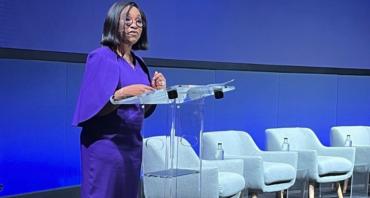
Secretary-General Patricia Scotland has outlined a framework to help member countries investigate and prosecute corruption offences, which cost the global economy around $2 trillion a year.Â
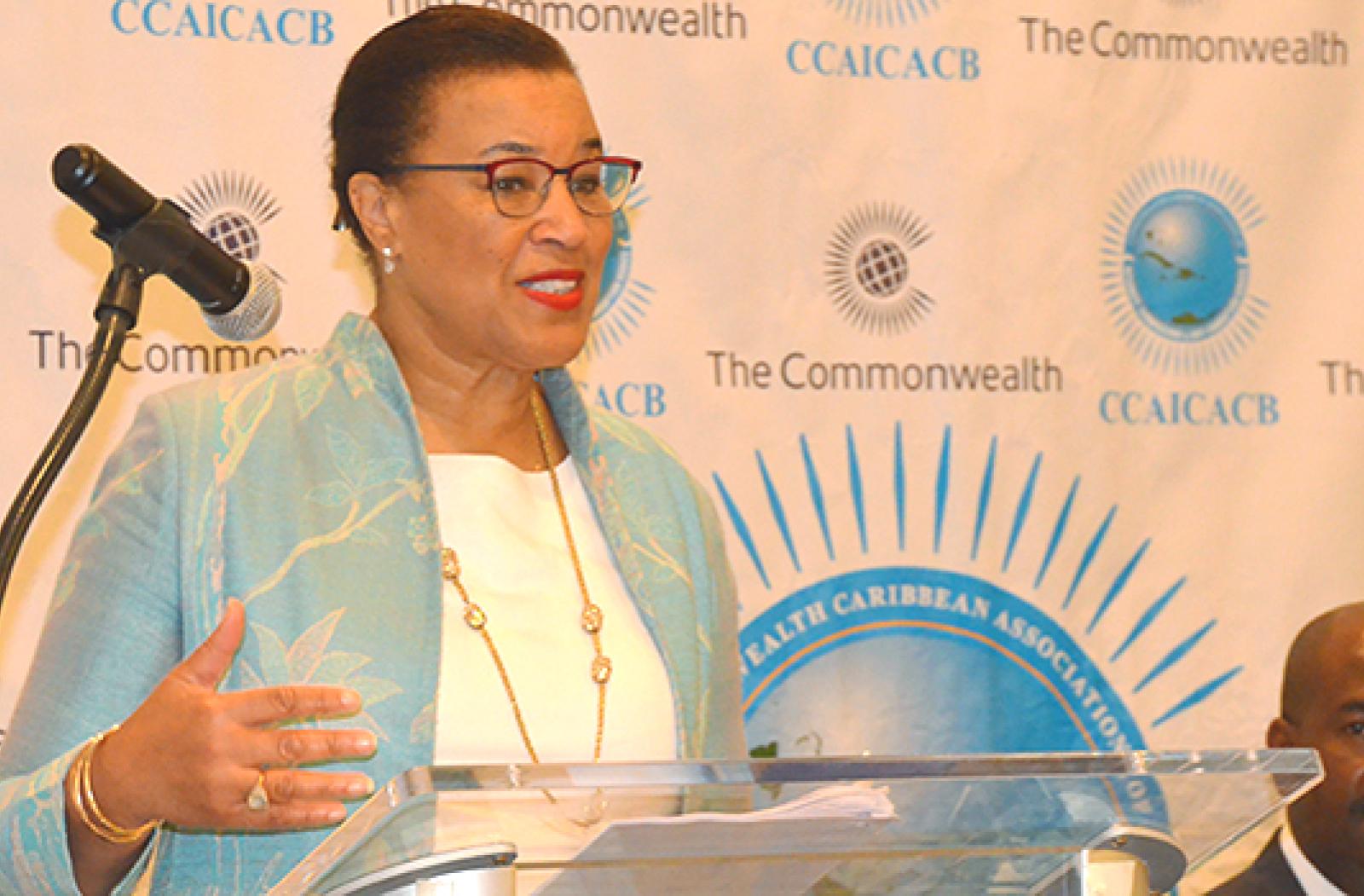
Secretary-General Patricia Scotland has outlined a framework to help member countries investigate and prosecute corruption offences, which cost the global economy around a year.
The Commonwealth Anti-Corruption Benchmarks framework is currently being developed by the Secretariat in consultation with member countries. The framework would provide clear steps to promote integrity and combat graft within public and private sectors.
The Secretary-General was speaking at the fifth annual regional meeting of the Caribbean heads of anti-corruption agencies. The meeting is being hosted in the Cayman Islands from 3-7 June.
She said: “This package consists of a set of 22 benchmarks, covering topics from sanctions for corruption offences to investigating and prosecuting authorities, and from political lobbying to the disclosure of asset ownership.
“Each benchmark is defined by a principle and contains detailed guidance for meeting the set level of achievement.
“The principles and guidance are consistent with international standards, and if adopted would go further in covering other areas of concern not previously addressed.â€
This is the first such framework to cover all areas of the public and private conduct. It is expected to be considered by the Commonwealth Heads of Governments in Rwanda next year.
At present, five Commonwealth Caribbean countries - the Bahamas, Barbados, St Vincent and the Grenadines, Dominica and St. Lucia – rank among the 50 least , while none sit among the top 20 most corrupt.
Patricia Scotland said: “The Commonwealth’s leadership and cooperation contribute to this [achievement], which brings member countries together, recognising that we are all at our strongest when we combine our efforts.
“The Commonwealth has been active in providing technical assistance and development support for national anti-corruption agencies to build their effectiveness in dealing with graft.â€
However, the Secretary-General stressed that the work of anti-corruption agencies must continue with renewed vigour in order to fully achieve the 16 Sustainable Development Goals (SDGs).
In this context, the Secretary-General also referred to the Commonwealth’s practical toolkit designed to help countries plan, track and coordinate SDGs implementation more effectively.
The meeting brings together the Caribbean’s most senior officials tasked with thwarting illicit financial flows. This year’s focus is based around the theme: ‘Transforming words into action: revitalising the fight against corruption’. Panel discussions will cover areas such as corruption in sports, modernising legislative frameworks, the investigative battle against corruption and new technologies to combat graft.
The Cayman Islands’ Governor, Martyn Roper, said that the Commonwealth is “the source of good†to an increasingly divided world.
He added: “The Cayman Islands have made great strides towards developing and implementing policies within the civil service and strengthening our integrity oversight bodies over the last few years.
“This meeting, therefore, comes at an opportune time for the Cayman Islands to intensify its enhancement of the ethical integrity of its public bodies.â€
At the meeting, officials will review their national anti-graft efforts, exchange experiences and improve understanding of the advanced techniques and procedures. They will enhance their knowledge in forensics, financial accounting and asset tracking, as well as prosecutions, public awareness and prevention.
Looking forward, the adviser and head of the Commonwealth’s public sector governance unit, Dr Roger Koranteng, said: “Anti-graft bodies in the Commonwealth Caribbean will emerge from the meeting as strong watchdog institutions with a more coherent response to corruption and transparency problems in the region to achieve the SDG 16.â€
The Commonwealth has organised the meeting in collaboration with the Cayman Islands’ Commission for Standards in Public Life and the Association of Integrity Commissions and Anti-Corruption Bodies in the Caribbean.
The association’s chairman, Dirk Harrison, thanked the °źÂț”ș for its continuing assistance and for its current work in developing the anti-corruption benchmarks framework.
In 2015, the association was established to leverage the Commonwealth’s convening power to boost south-south learning and sharing of practices among the countries of the southern hemisphere.